
They were squeezed in firm shoes, thick socks for so long, we even had them covered at home.
If you also feel that your feet are not entirely well, that they do not feel free and comfortable, that even your movement is not as comfortable as you would imagine or as it used to be, for example, at the end of last summer, now is the time to do something about it! IT IS TIME TO WAKE UP YOUR FEET FROM HIBERNATION! To revitalize them! In this 3rd part, I will tell you how to do it, how to exercise your feet! Shall we get to it?
However, it's not just about winter or shoes... Over the years, I've had the opportunity to meet people who didn't even wear any shoes... they walked barefoot all year round... or people who only wore barefoot shoes, regularly walked long distances, ran... yet their feet didn't look beautiful, healthy, natural. Why was that?
The foot, like any other part of our body, needs to be used within the full natural range of its movement capabilities. All its parts! And that's exactly where the problem lies. Barefoot shoes, non-barefoot shoes, shod or barefoot... the human foot is created for much more than just walking, standing, or running!!
Yes, much more! And it needs ALL THOSE MOVEMENTS for its beauty and health!
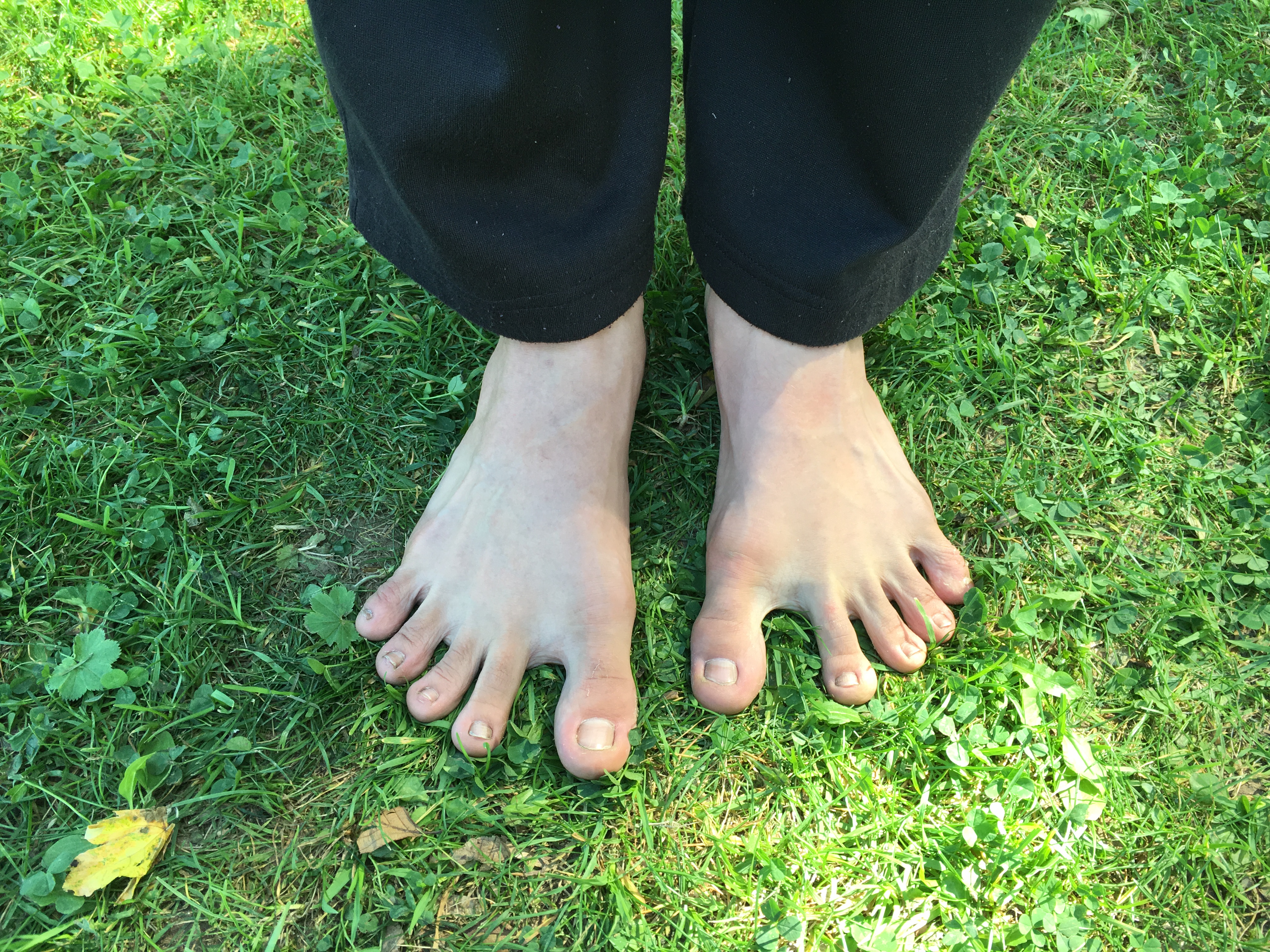
The most common cause of foot problems, such as bunions, flat feet, ingrown toenails, and related issues, are definitely shoes! (You can read why HERE and HERE). However, merely removing this cause, i.e., changing shoes, may not be enough. The foot has simply suffered for many years from being restricted! It couldn't move, and it will probably need to be properly compensated for.
Why?
When the foot does not have the opportunity to move within its full natural range, it moves, and thus strengthens, stretches, and massages itself within a limited range, only in a certain place, only to a limited extent. Weakened arches, ankle problems, knee problems, hip problems, lumbar spine problems, and even a protruding belly are all typical examples of problems we cultivate by not using our feet and legs overall.
So what do our feet miss most?
1) FREEDOM
Bending, Straightening, Stretching... in all possible positions.
By bending, the foot also maintains its condition. It stretches, lubricates, and loosens. Muscles, tendons, joints, ligaments, fascia, all parts simply need it.
When we wear footwear whose mobility is significantly less than the natural mobility of our foot, our foot stiffens, joints are not lubricated, muscles weaken, and ligaments and tendons become more brittle.
Well, and when everything stiffens and instead of strong, healthy, and flexible "rubber bands" we have weak, stiff, dried, and shriveled "rubbers"... you can probably imagine what happens when we suddenly need our foot or ankle to really work. Yes! The "rubber" stretches or even breaks.
 2) WORK
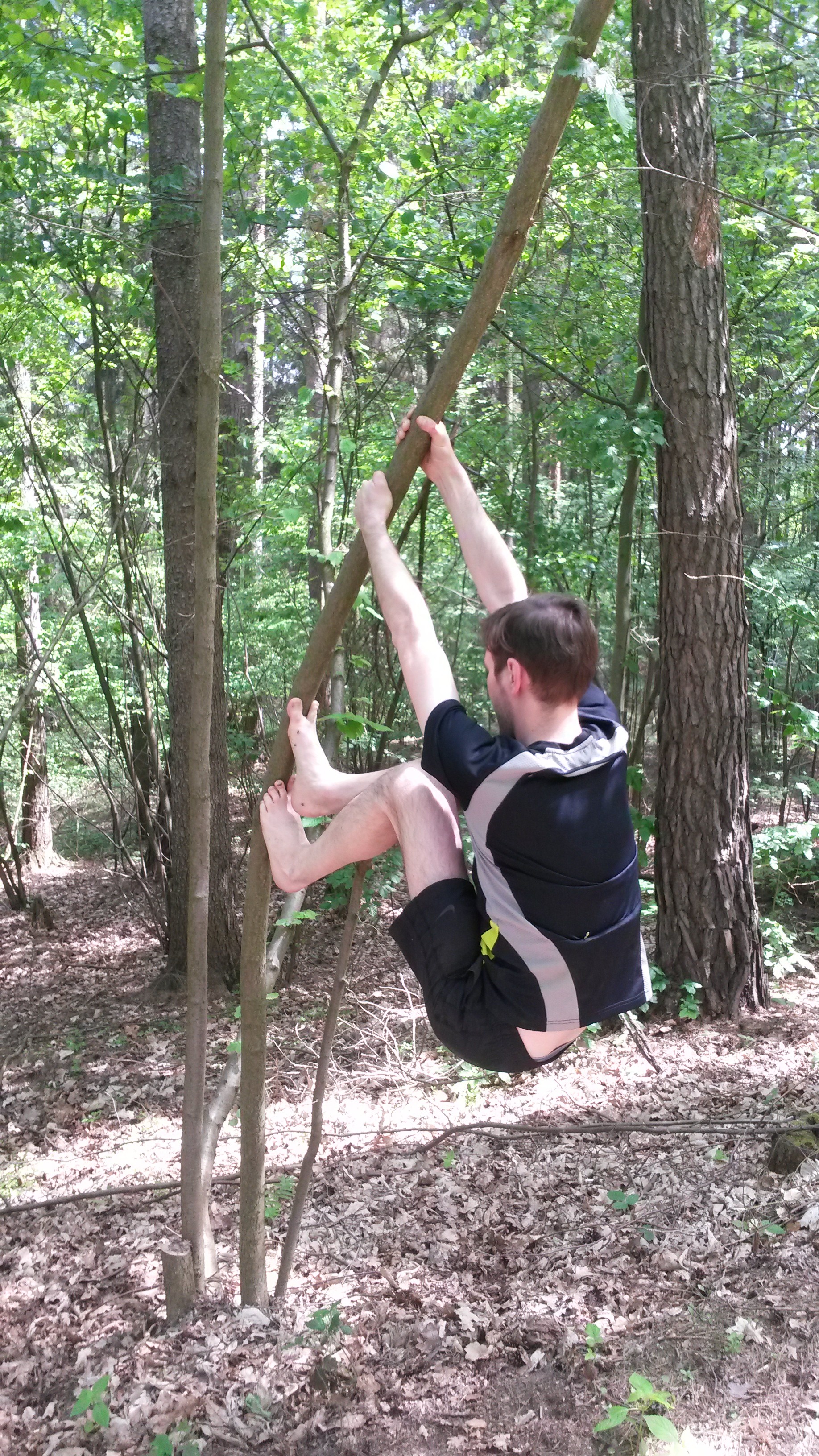
Strengthening, Exercising, Clenching, Feeling, GRASPING!
Our foot is made for work. It needs to be subjected to pressure! It needs to clench, GRASP, work in all possible positions. This is how it exercises, gets blood flow, strengthens, and starts healing processes.
Today, we don't allow it enough, and that's why it weakens, arches sag, ankles collapse, etc.
3) INTERACTION
Reacting, Feeling, Perceiving, Adapting
The foot is created to adapt! It needs to react to the surface we walk on! This is how it stays in shape. When we prevent it from doing so, when we don't provide these valuable stimuli, it gradually withers, weakens, and loses its movement intelligence, i.e., the ABILITY to react and cope with challenges and situations.
How to provide all this?
I have prepared a set of exercises for you that covers all three areas mentioned above. A set with which you can start building the strength, flexibility, and health of your feet.
The exercises are for both beginners and advanced. For some, they will be quite a challenge! For others, a game. If you master them, don't worry, that's not the end of possible development. ???? There are also harder variations.
I'll add one more motivational story about strong feet and the overall intelligence of our body!
It's been almost two years since one of my clients had an accident...
We've been exercising together for years. For a large part of the year, we move outdoors. But during the winter, we didn't want to be outside, so we moved indoors to his apartment. The smaller space encouraged us to focus on individual movements, on weaker areas. To strengthen them so that we could integrate them into larger and more complex movement units when we went back outside. Well, and one of the areas we started working on intensively was the feet.
We didn't even know that in a few months our work would be put to the test...
And so it happened. One day, my client stopped at a gas station, was getting out of his car, when another car arrived and parked on his foot. He intentionally says "parked" because the car really stood on his foot for about 10 seconds before its driver noticed something was happening. It looked tragic. My client is a successful musician, and a demanding tour was awaiting him. Without a functional foot, it would have been a problem, but... his foot remained functional!! To the surprise of the attending physician, there was no fracture! And so, a week later, my client was again jumping on stage without difficulty.
This story may seem almost supernatural, unbelievable, superhuman... From my point of view, however, it is quite the opposite! This story and these "abilities" of the body are absolutely Human to me!
So let's get to it!
EXERCISES
Perform the entire exercise 2-3 times a week. If you get hooked, you can, of course, do it more often. But you don't have to overdo it... the main thing is that you enjoy it! 
1) HEEL SITTING
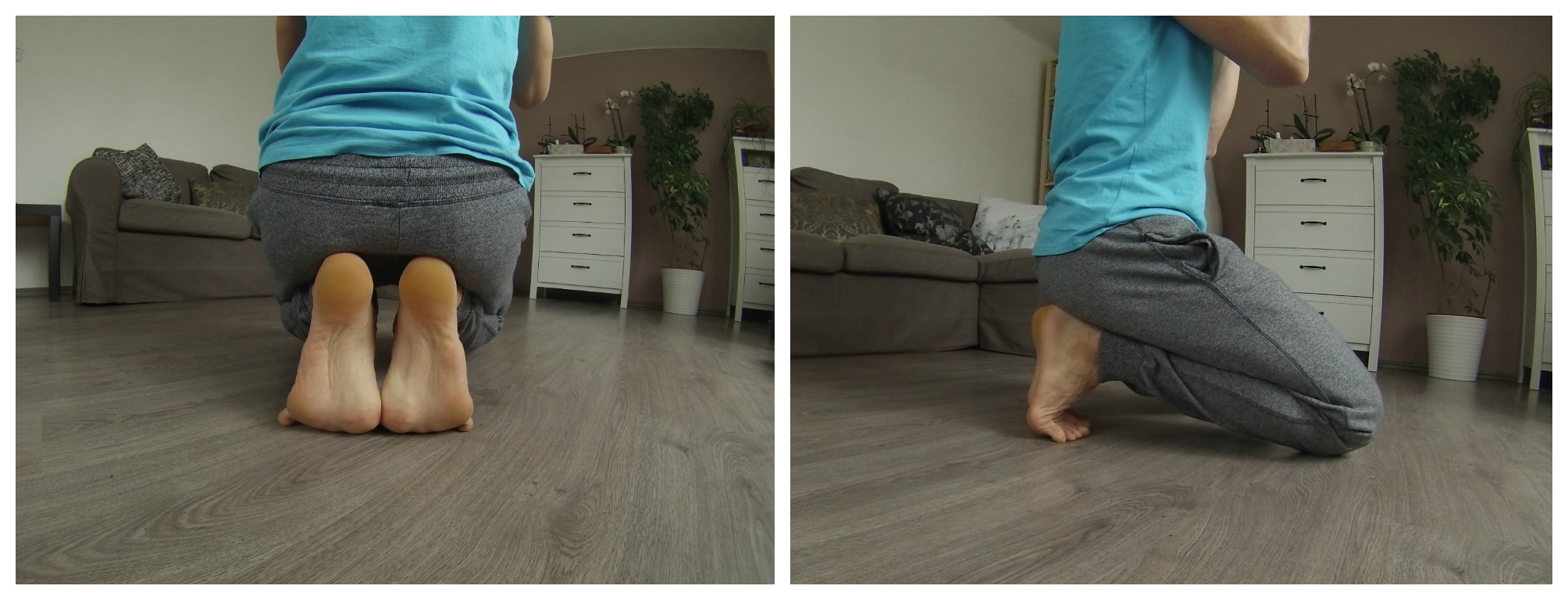
a) Kneel and sit on your heels. Keep your toes bent underneath you. You are resting on the balls of your toes. Stay in this position according to your abilities (10-30 seconds)
b) Kneel and sit on your heels. Keep your toes stretched (pointing backward). You are resting on the top of your feet. Stay in this position according to your abilities (10-30 seconds).
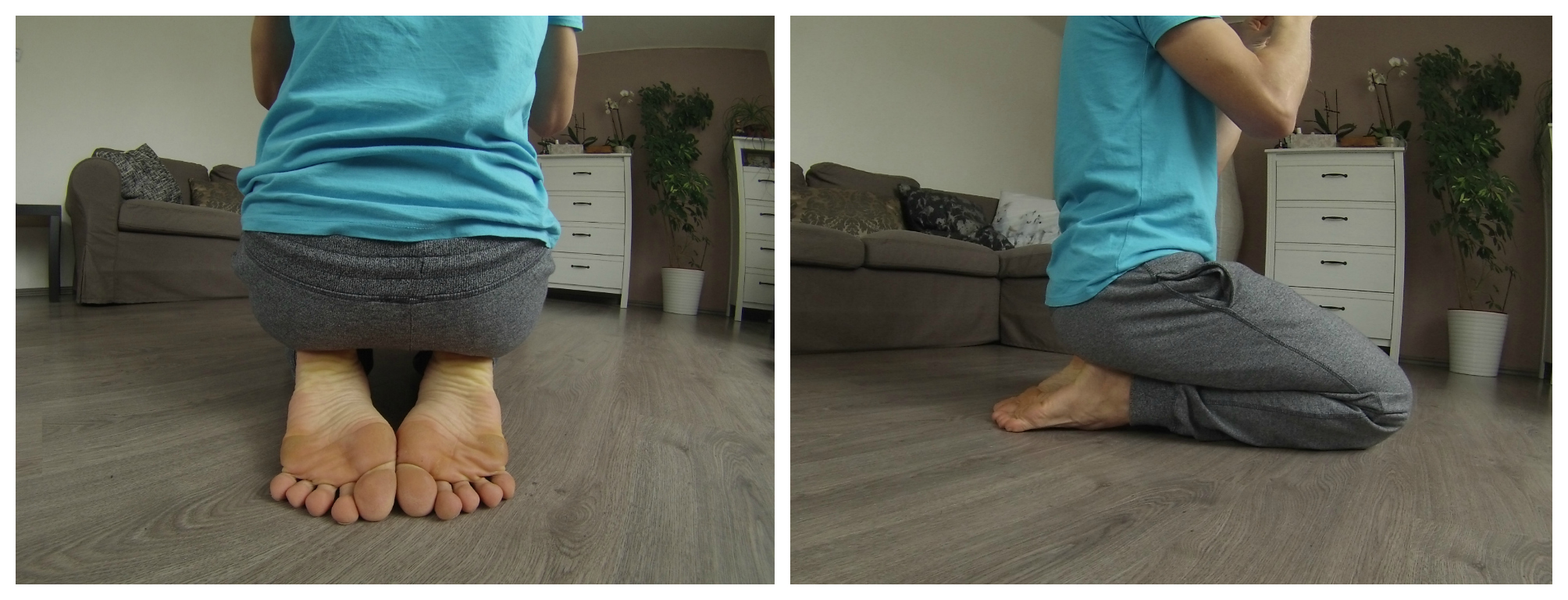
Smoothly switch between positions 1a and 1b and alternate them several times. (At least 3 times each)
TIP: Try to master the position with heels as close together as possible! This is where it is most needed for the vast majority of people.
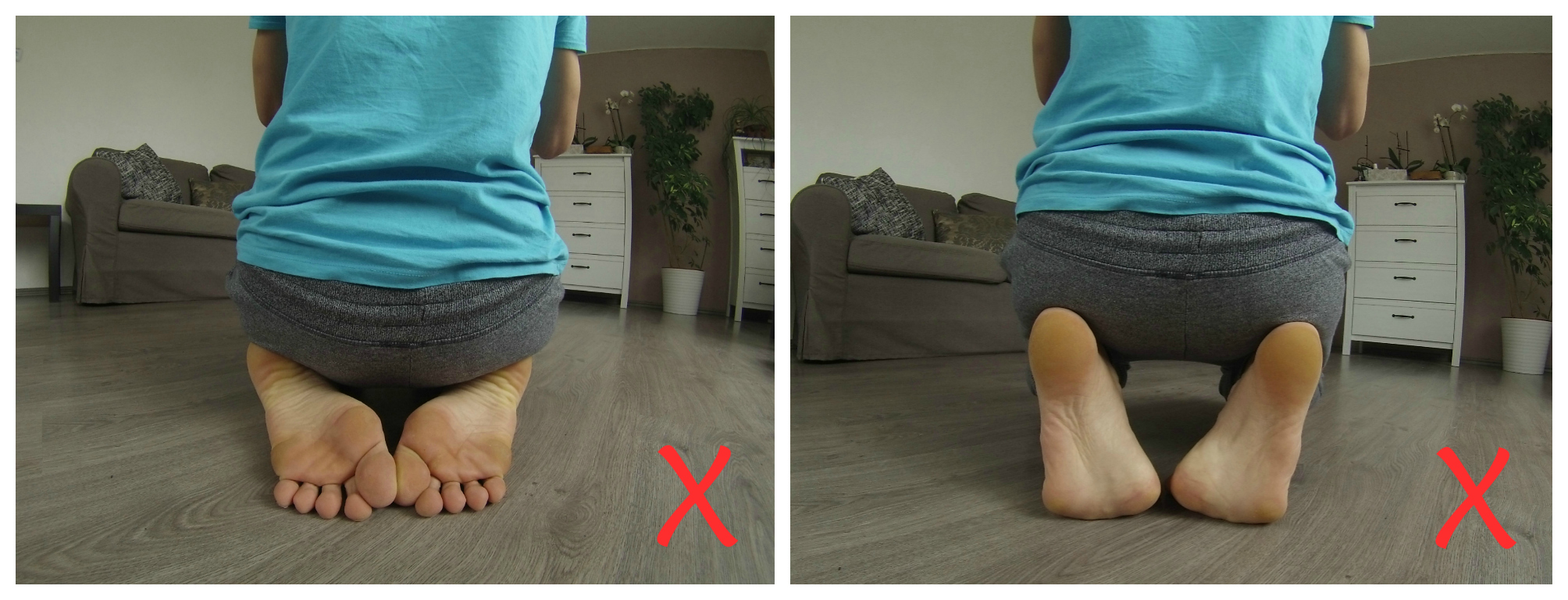
It is important that these positions become comfortable. They are natural. If they are painful or even unattainable, the foot cannot use them for walking and other movements! It is forced to use another path. Less painful, attainable, instead of the natural one. This greatly affects our movement, and especially knee ligaments, hips, lumbar spine, and more suffer from it.
2) TOEGA
a) Rest your foot on the mat so that all toes point under the foot (they are bent backward). Apply appropriate pressure from above. Be careful not to just push! Rather, roll them a little = push down, slightly forward, and at the same time slightly point the heel to the ground. Hold for 20-60 seconds. Repeat 2-3 times with each foot.
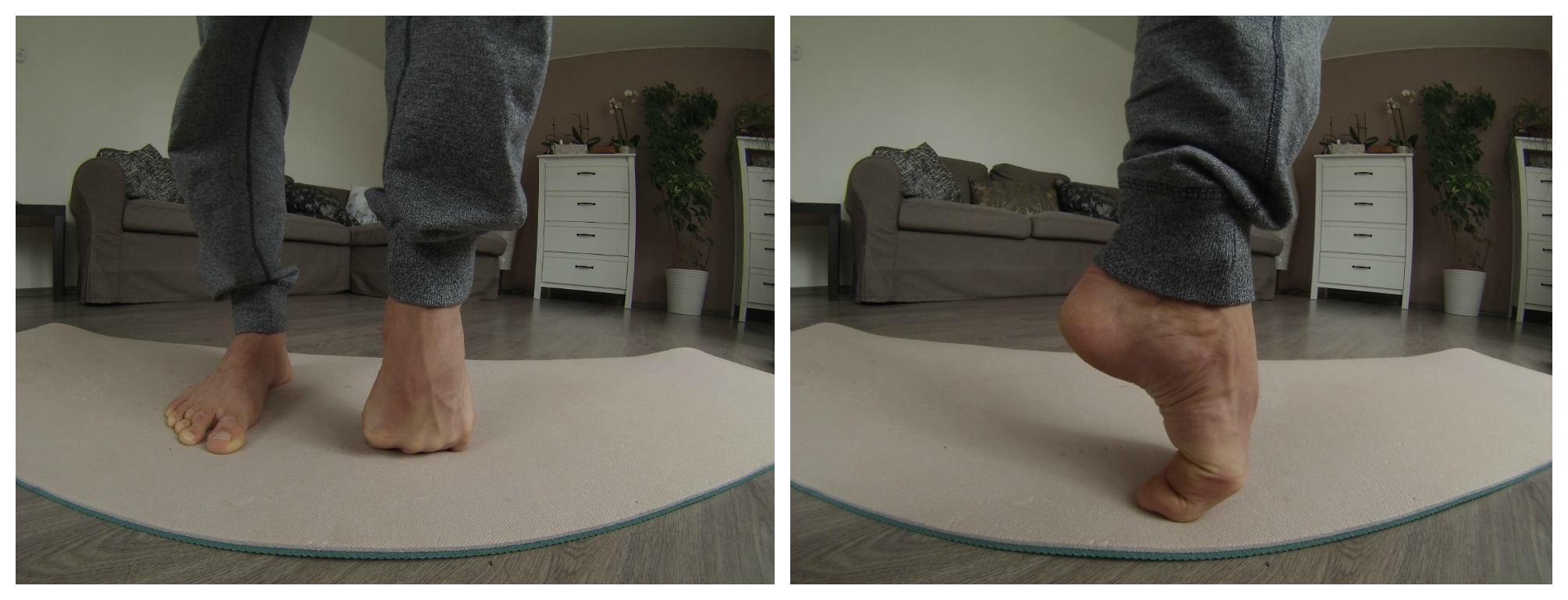
b) Rest your foot on the mat so that the big toe points backward (under the foot) and the other toes forward. (Feel free to use your hand to arrange the toes into the desired position at the beginning.) Apply appropriate pressure to the foot from above. "Push" between the big toe and the index toe and at the same time slightly rotate outwards (right foot clockwise, left foot counter-clockwise) so that the toes open nicely. If you can do all this, gradually bend the foot more and more downwards (as if you wanted to stand on your heel as well). This exercise will help your big toe return to its natural position, i.e., to separate from the other toes. 2-3 sets of 20-60 seconds.
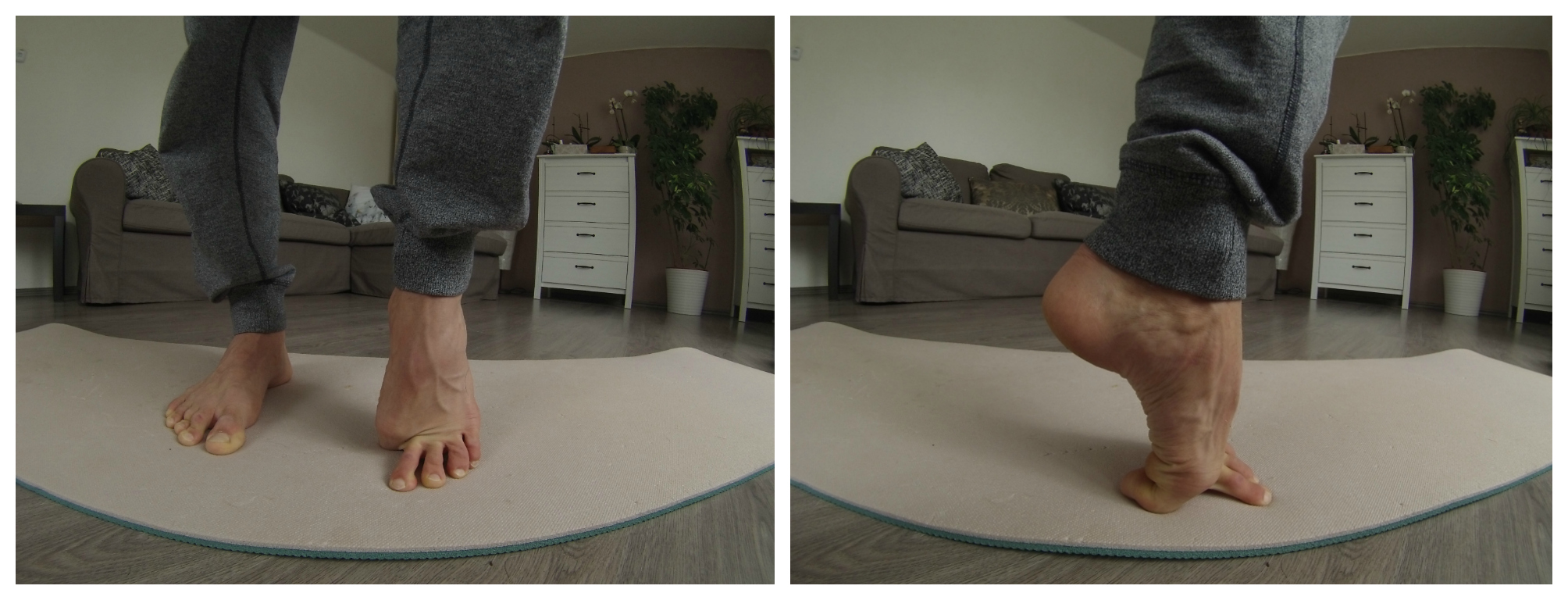
c) Rest your foot on the mat so that the big toe points forward and the other toes backward under the foot. (Feel free to use your hand to arrange the toes into the desired position at the beginning.) Apply appropriate pressure to the foot from above. Push between the big toe and the index toe. If you can do all this, gradually bend the foot more and more downwards (as if you wanted to stand on your heel as well). 2-3 sets of 20-60 seconds.
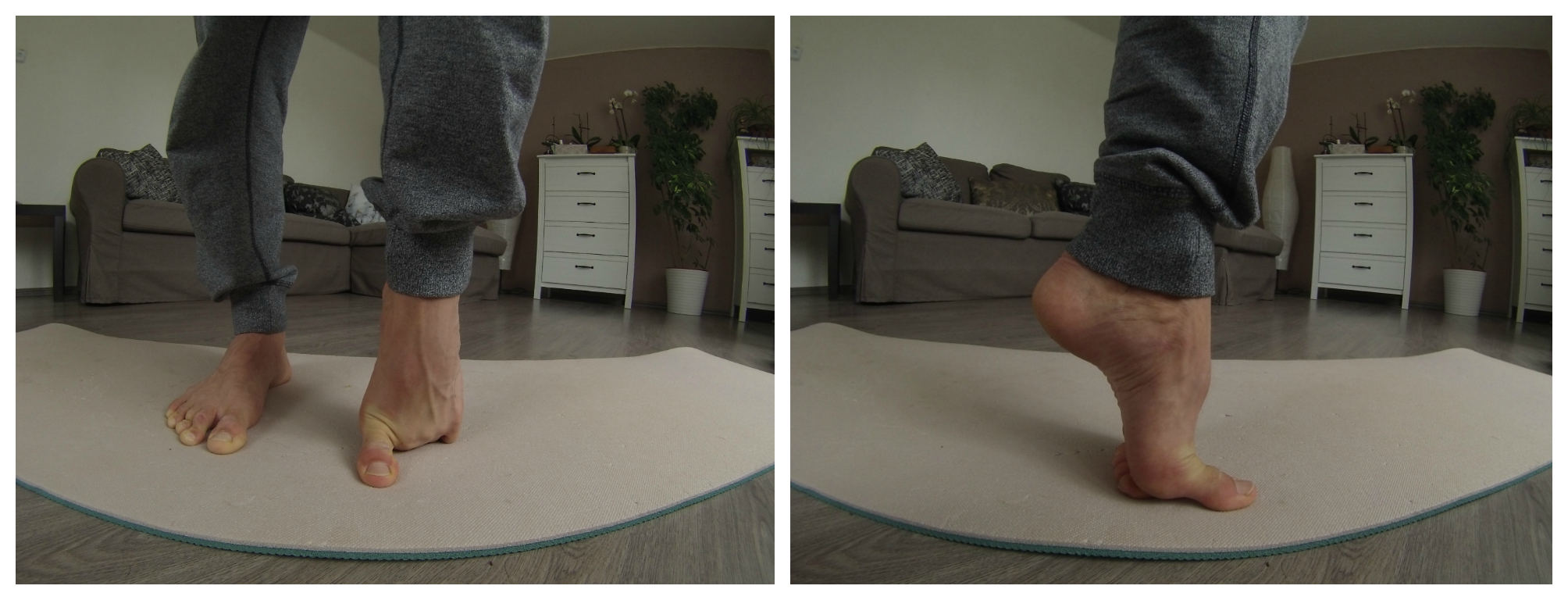
TIP: If exercises 2b and 2c are too challenging for you, don't worry, start gradually! 2d and 2e will help you with that. ????
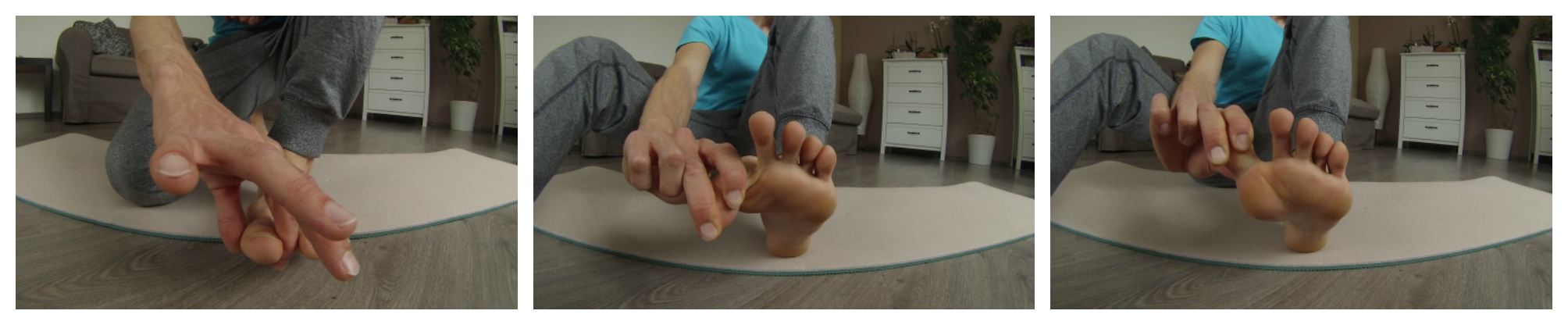
d) Sit down and hold your big toe in your palm. Pull it out, bend it down, and move it away from the other toes. Pull out, BEND, and SEPARATE as much as possible. Hold and gradually increase the range of its movement possibilities. (Caution! Hold the entire big toe! Not just its last joint.) 15-60 seconds, 2 sets.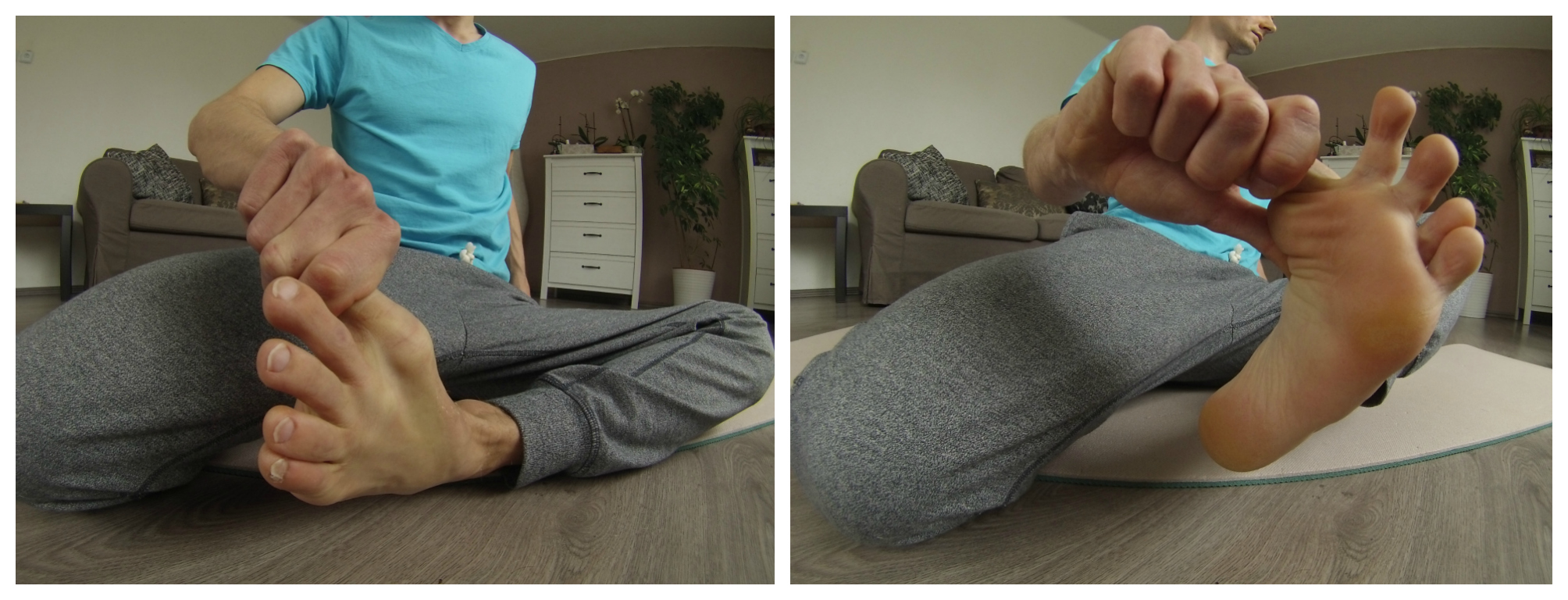
e) Sit down and grab your big toe. Pull it out, bend it up and move it away from the other toes. Pull out, BEND, and SEPARATE as much as possible. Hold and gradually increase the range of its movement possibilities. 15-60 seconds, 2 series.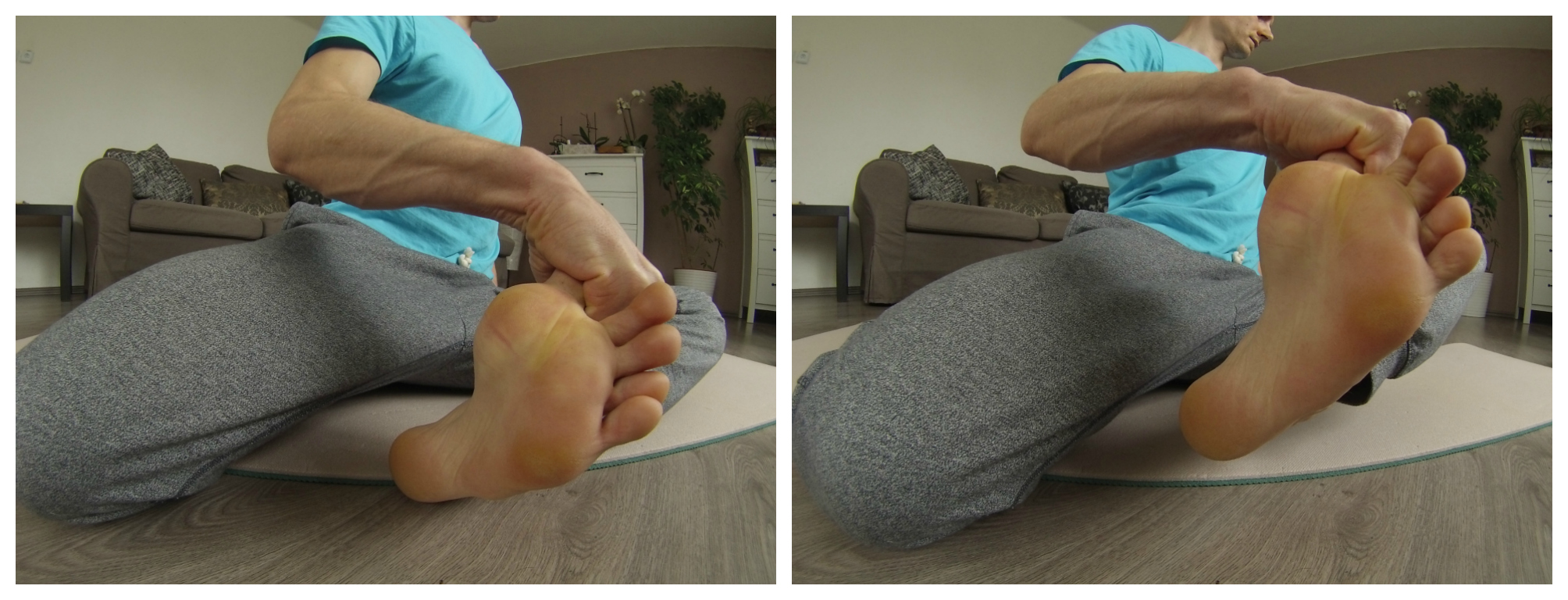
3) TIP-TOE SQUAT
a) "Hold"
Squat on your tiptoes (heels lifted off the ground). Point your knees forward. Hold the position for 30-60 seconds. 2 sets.
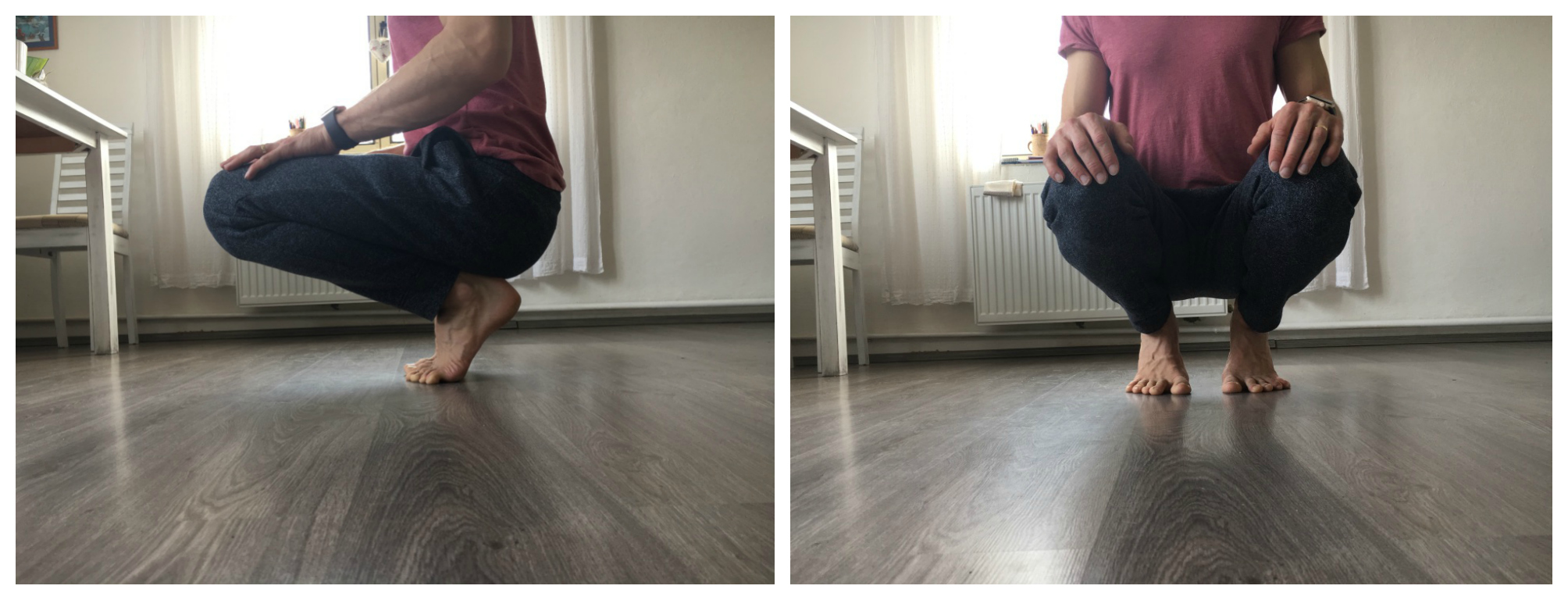
After a while, you will probably feel your toes start working. And not just your toes! If necessary, hold onto something initially.
TIP: This position is very simple, it's a "resting position". Apply it anytime during the day.
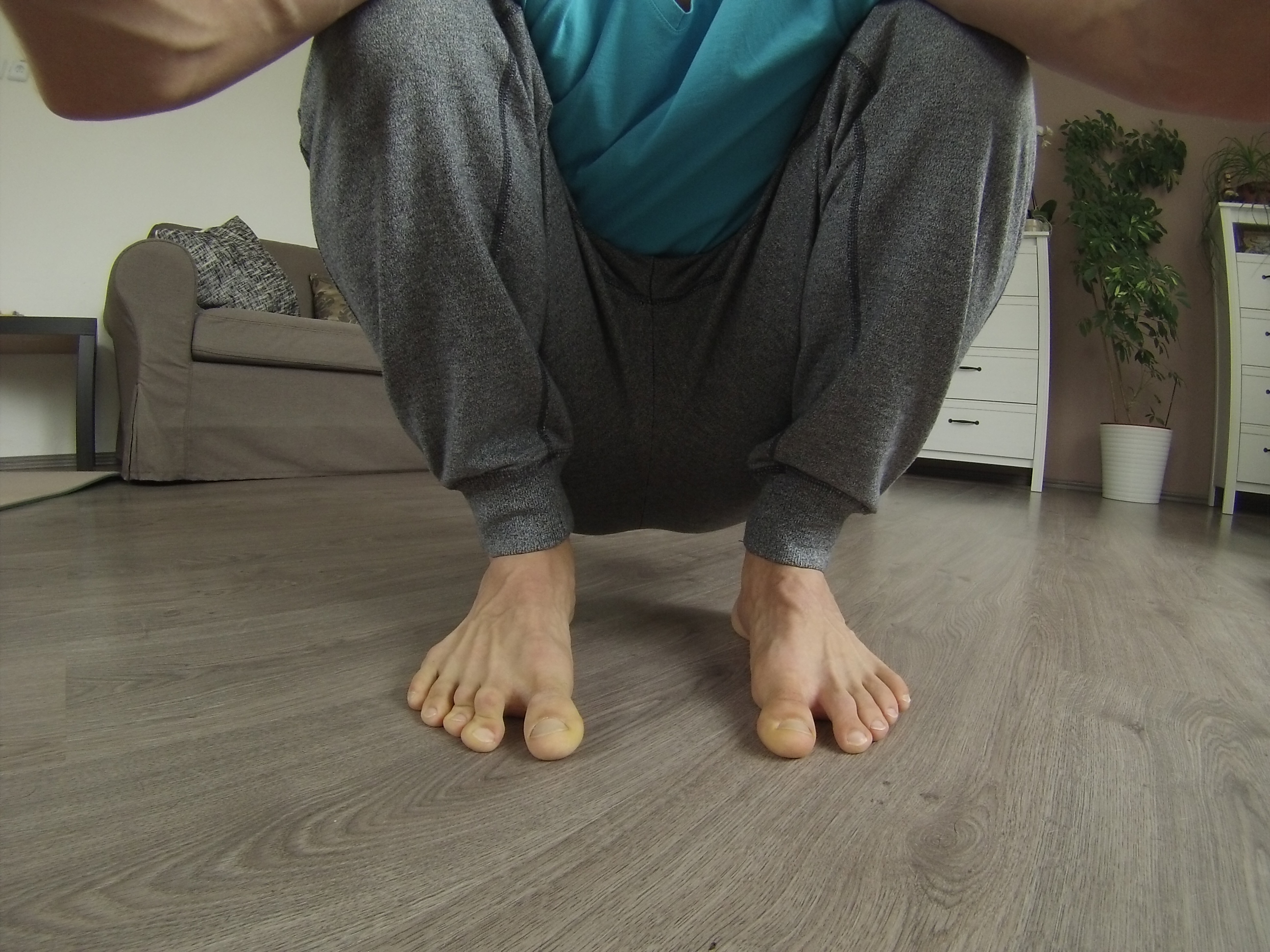
If you're barefoot, don't forget to separate your big toes and even the other toes properly = set them to their natural position!
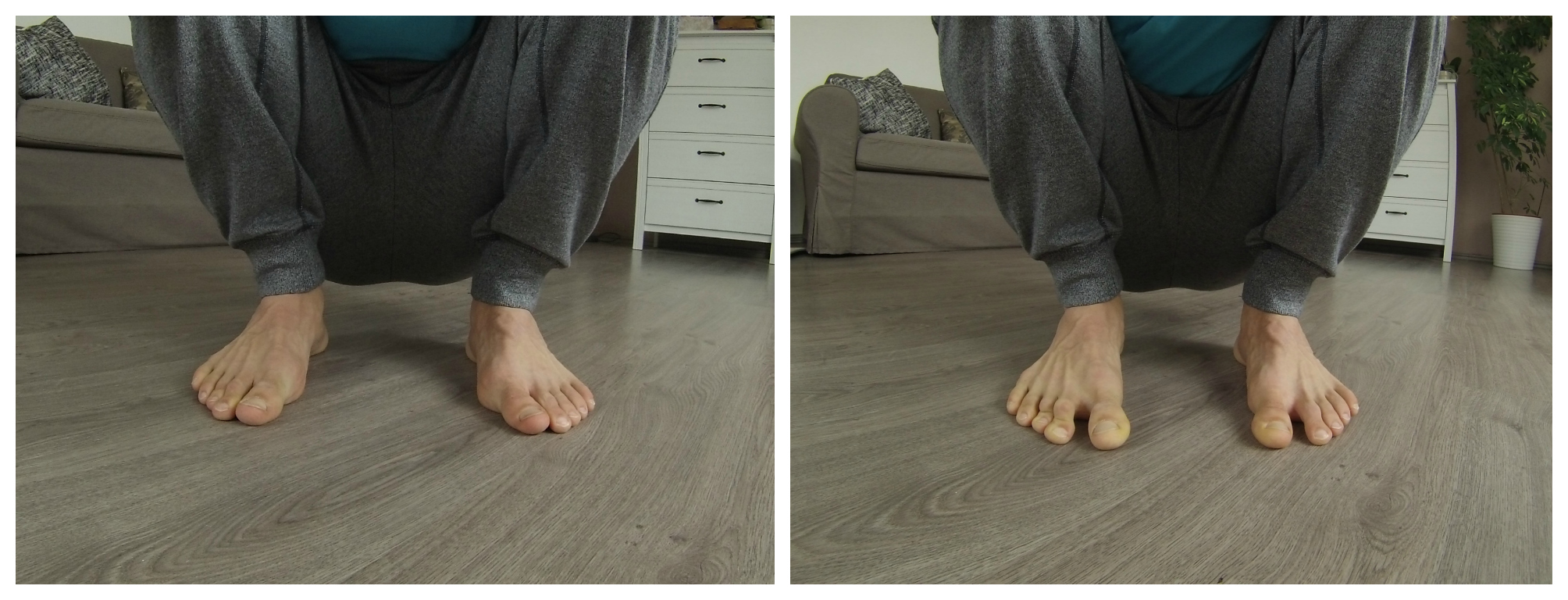
b) Calf Raises in Tip-Toe Squat
Squat on your tiptoes, heels lifted, knees pointing forward. Press into your toes and lift your heels as high as possible. Relax, and they will drop a little lower. Repeat 10-20 times for 2 sets.
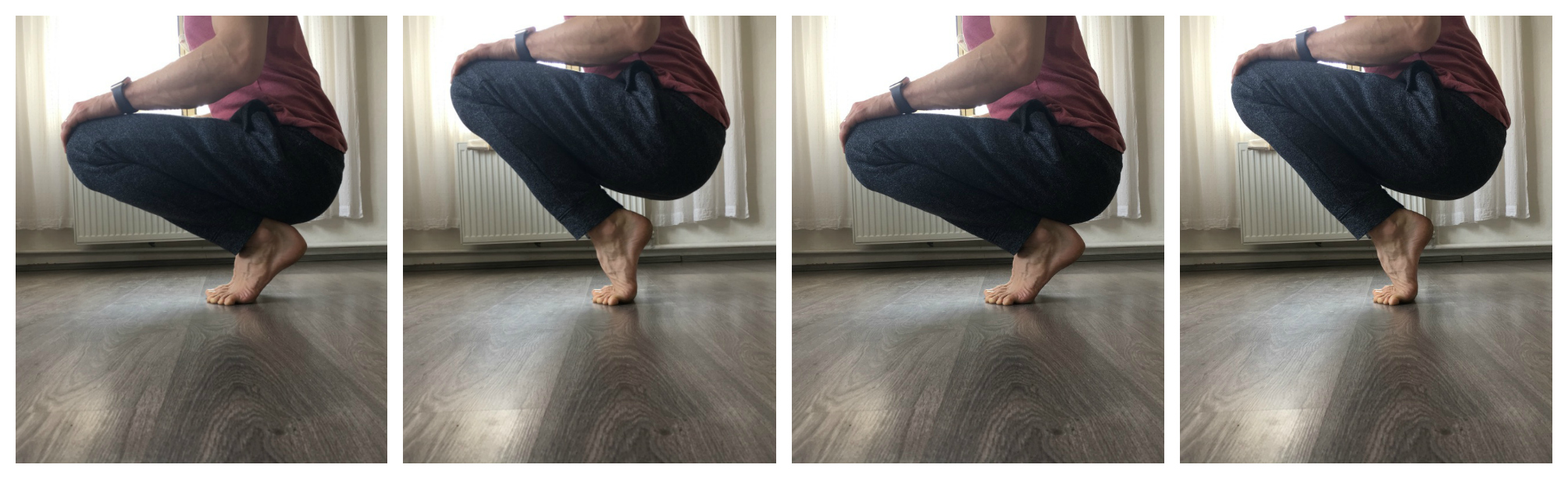
If necessary, you can hold onto something initially.
c) Balancing in Tip-Toe Squat
Squat on your tiptoes. Slowly slide your knees forward. When you reach your limit (= the point beyond which you would lose control of the movement and lose balance), clench your toes into a fist! This will slowly but controllably bring you back to the starting position. 8-30 times in 2 sets.
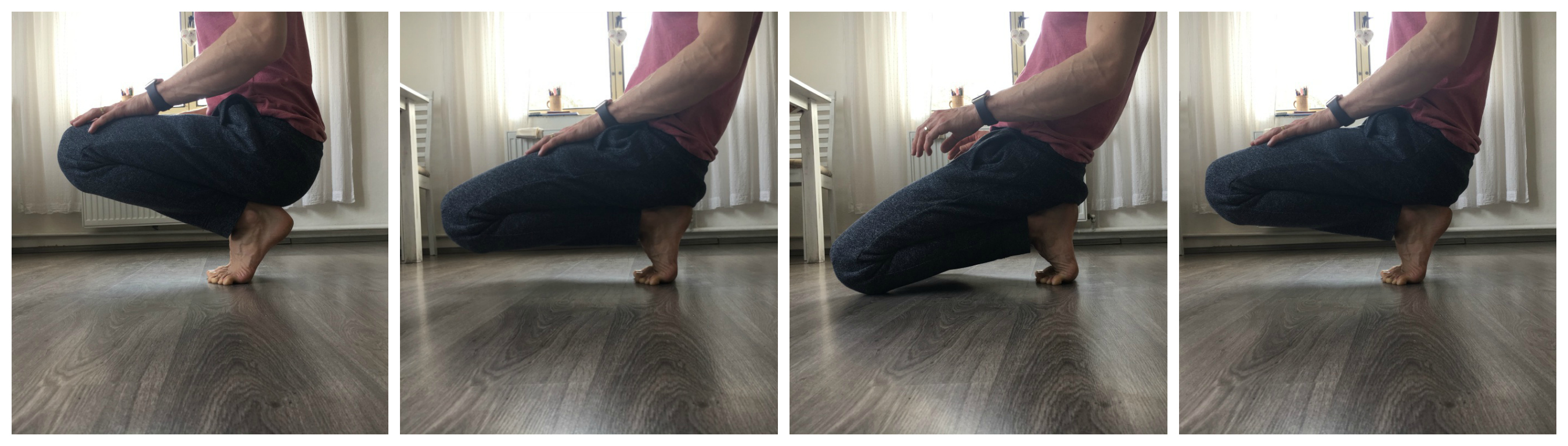
It's important to return by really clenching your toes, as if you want to dig them into the ground! Your transverse arch will definitely thank you for it!!
If necessary, you can hold onto something initially.
Before starting the exercise, don't forget to set your big toe and even your other toes to their natural position!
TIP: If exercise 3c is too much for you, start with just gentle rocking back and forth. Gradually add active toe clenching and build their ability to propel the entire movement backward.
Exercise 3c is often very intense! If you do it well (if you really return by clenching your toes and not by shifting your weight), within 20-30 seconds you will start to feel your feet significantly... they will start to burn, hurt... You might be surprised how much. But it's okay. Feet are often surprised that after a long period of not being used, we are asking something of them. ???? However, they will adapt very quickly.
It's my favorite exercise. I use it to introduce my clients to their feet. Moreover, it exercises not only the feet but also the shins, calves, muscles around the knees, and more.
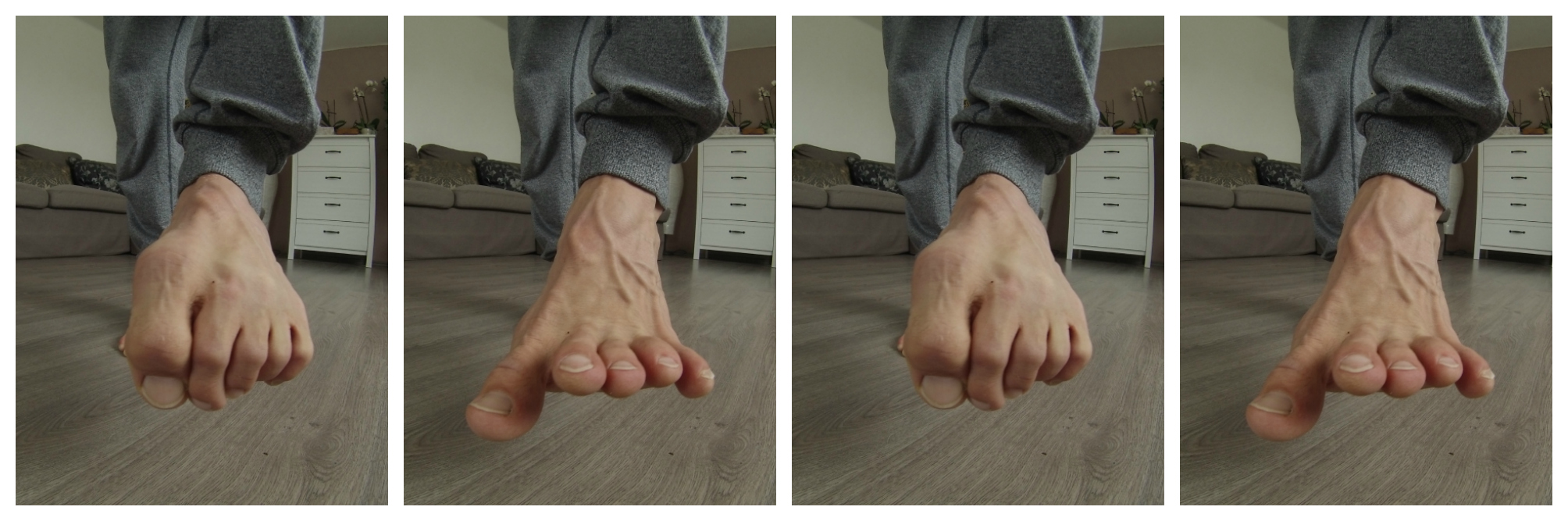
4) TOE CONTROL
Lift your foot into the air, clench your toes into a fist, and hold for 3 seconds. Then release the grip, spread your toes as wide as possible, and hold them spread for 3 seconds. Repeat 10 times in 2 sets.
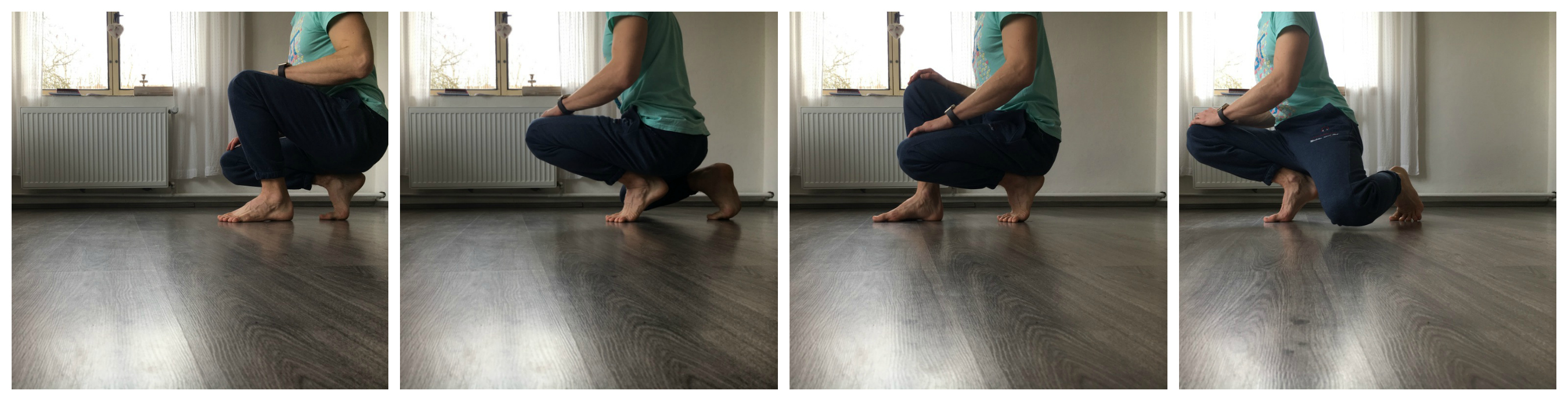
5) DUCK WALK
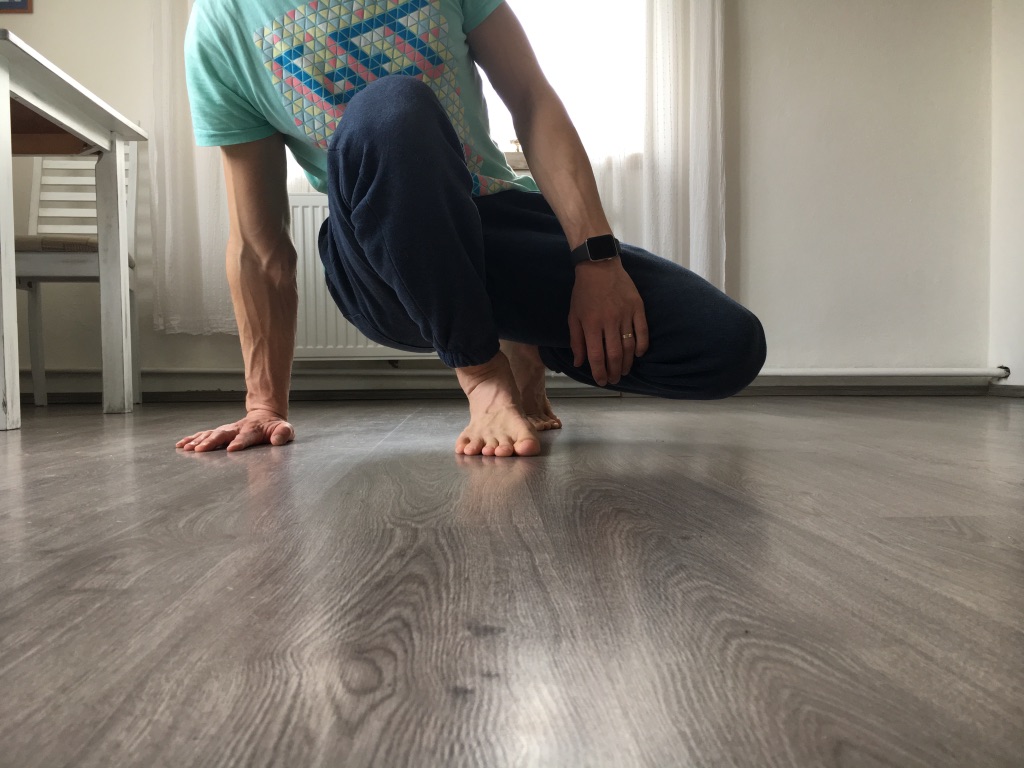
A good "exercise" for loosening up the legs is the so-called "duck walk." Start in a squat, with one foot placed in front of the other. Shift your weight to the front foot, relax the back leg, lift it, and move it in front of you. Repeat the same process from the other side - shift weight, lift the back leg, move it in front of you... This moves you forward.
The knee of the front leg always goes forward, the knee of the back leg to the side. Exchange, front forward, back to the side... you need to catch the rhythm, but I believe you can do it.
Try to be as upright ("chest out") as possible and look and point your chest forward. If you can manage, align your feet completely in one line, as if walking on a balance beam.
If necessary (knee problems, very stiff toes, etc.), you can initially support yourself with your palms on the ground.
Besides strengthening your entire legs, this exercise also stretches and naturally separates your big toes! Can you feel it?
MOVEMENT PATTERNS
A large number of people today overload their knee ligaments, hips, lumbar discs, and develop a bulging belly just by ordinary walking or standing. Why is that?
It started with the advent of a lifestyle in which natural movements such as squatting, active movement in a squat, or resting on the ground are completely absent, as well as the flourishing of insufficiently spacious and inflexible footwear. Today, our movement patterns have changed so much that whatever we do, even just ordinary walking or waiting for a bus, often causes us problems.
Walking is one of the basic movement patterns, and I often get questions about how to walk, how to change our gait so that we don't stomp too much, so that we don't land hard on our heels,...
So then:
6) CONSCIOUS WALKING
Try to place your foot as straight as possible, with your toes pointing forward. Don't think about impact or anything else, focus on the push-off! Focus on your big toe being the last part of your foot to push off the ground! Gradually shift your weight forward along your foot towards your big toe. Slightly press your toes into the ground, and your big toe will be the last part to "push off" the surface. As if you wanted to press your big toe into the ground quite firmly and consciously. Then your foot lifts off the ground, and the exact same process follows with the other foot.
This is conscious walking, where you strengthen your feet. You don't have to walk like this all the time. Think of it as walking practice, as conscious movement, as a way to "align" your walking.
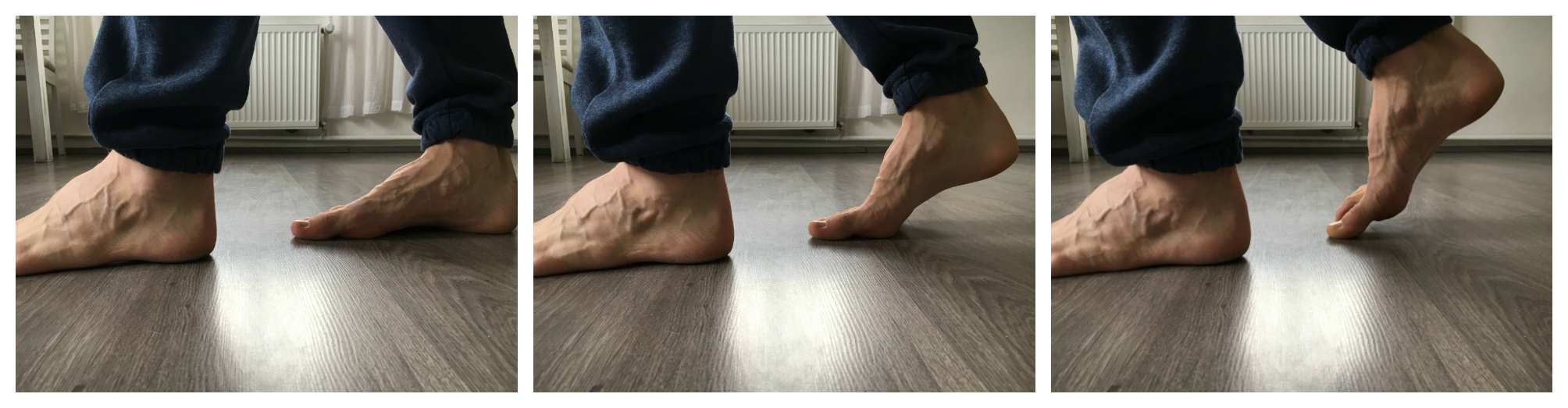
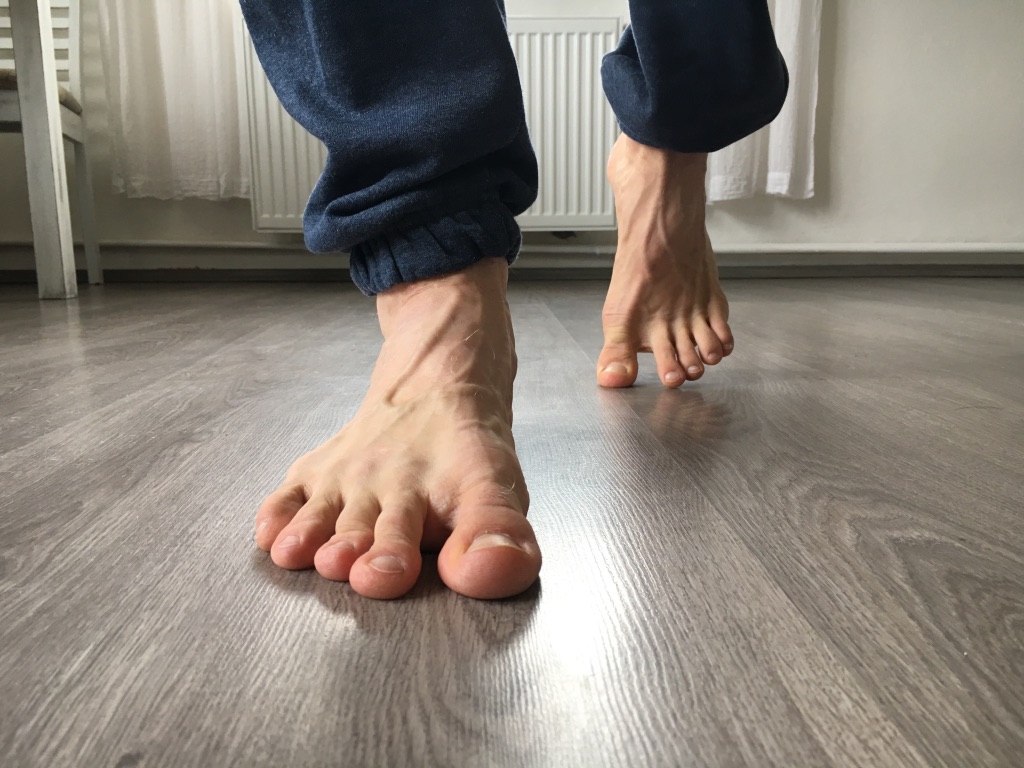
Note: If your big toes are in really bad shape, e.g. very bunioned, it will be necessary to really loosen them up first!
Tips for the end:
We need our toes properly separated!
So move them, stretch them, separate them whenever you can!
On the couch, while watching TV, grasp your big toe in your palm and stretch it, rotate it, pull it,... (see, for example, exercises 2d, 2e).
In the office, take off your shoes and socks and separate your big toe from the table leg.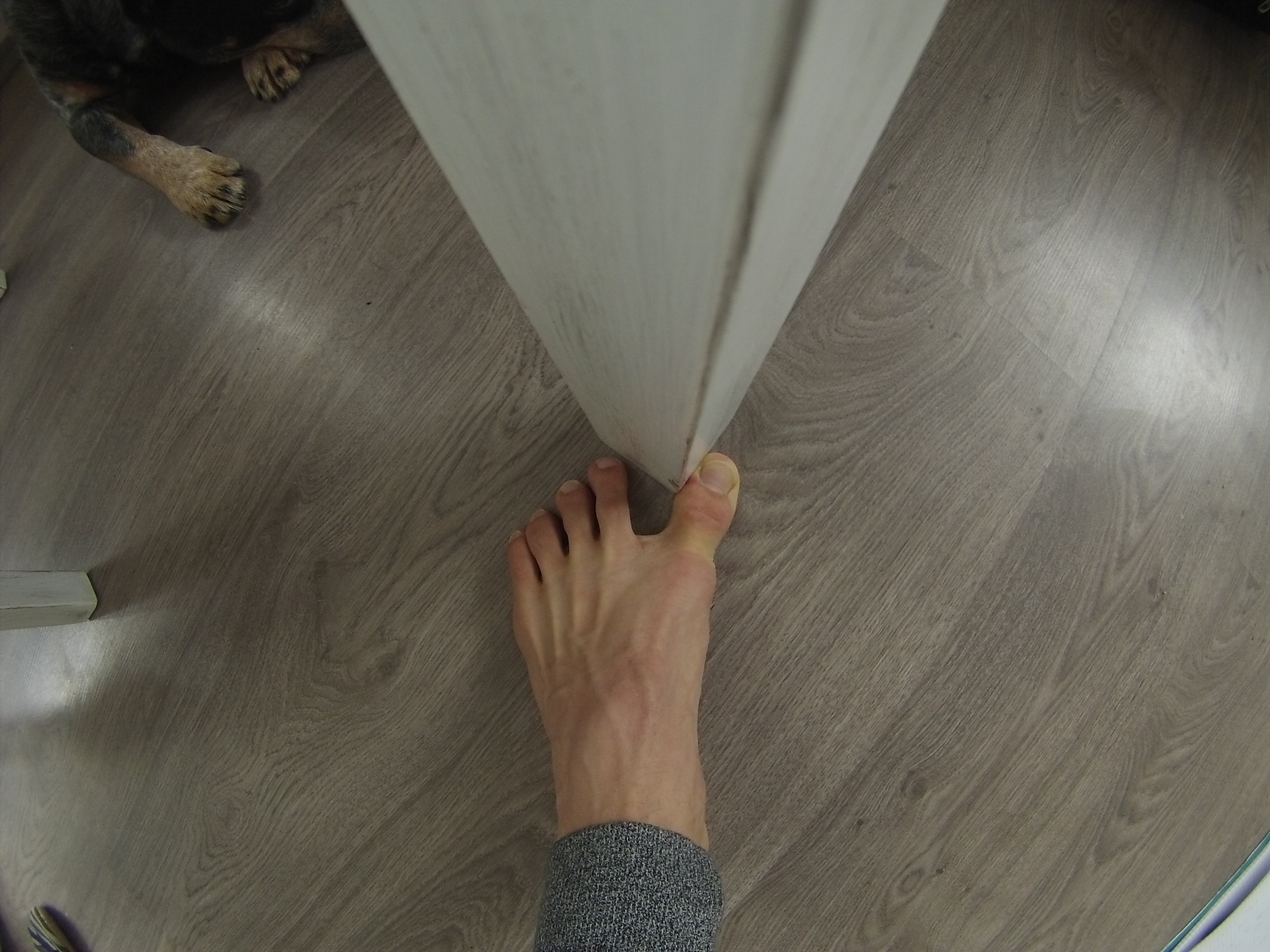
Or hold it with your other foot and separate it.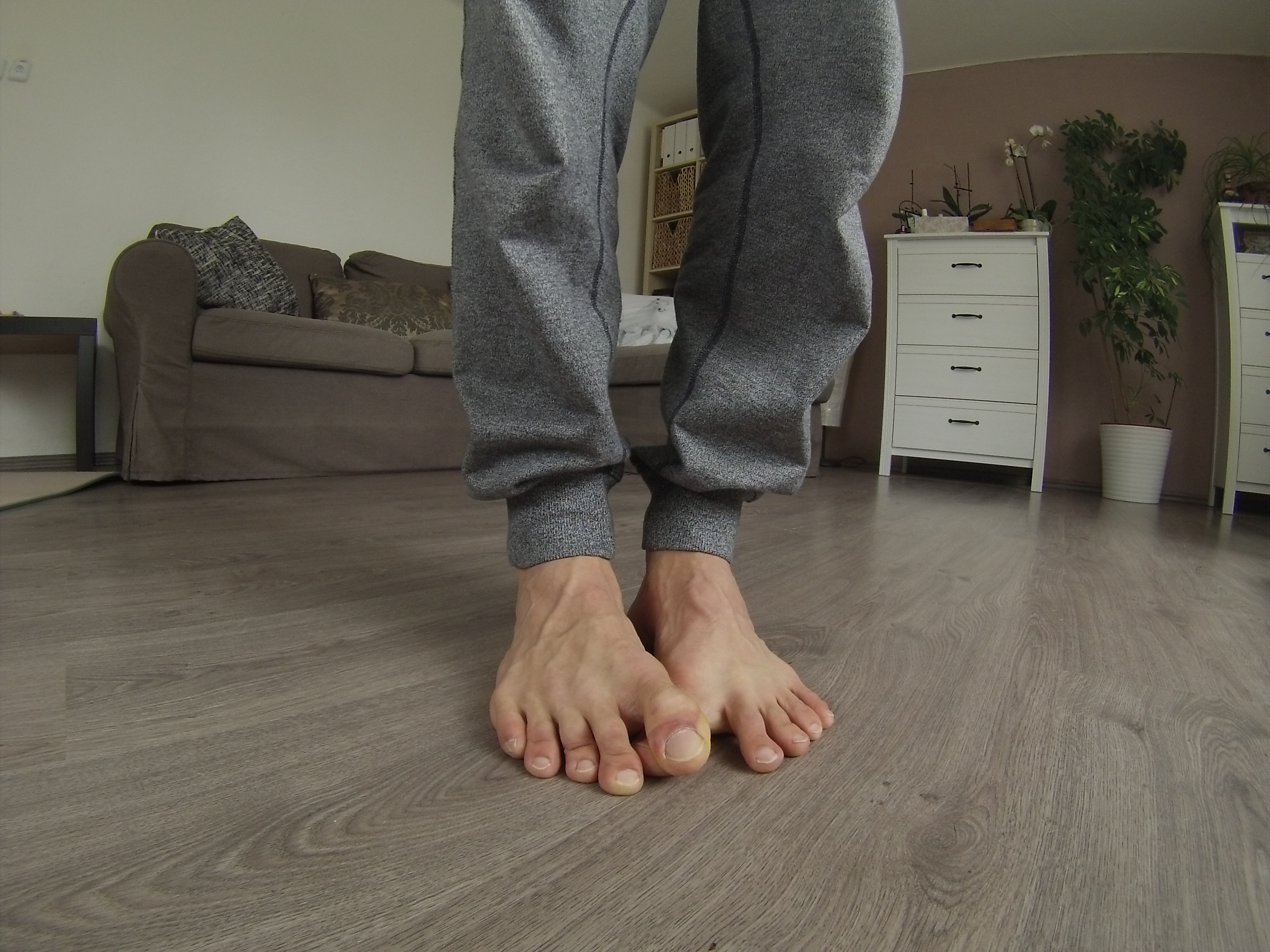
Help yourself with a string or ribbon (a ribbon will definitely be more comfortable). Many exercises can be done this way as well.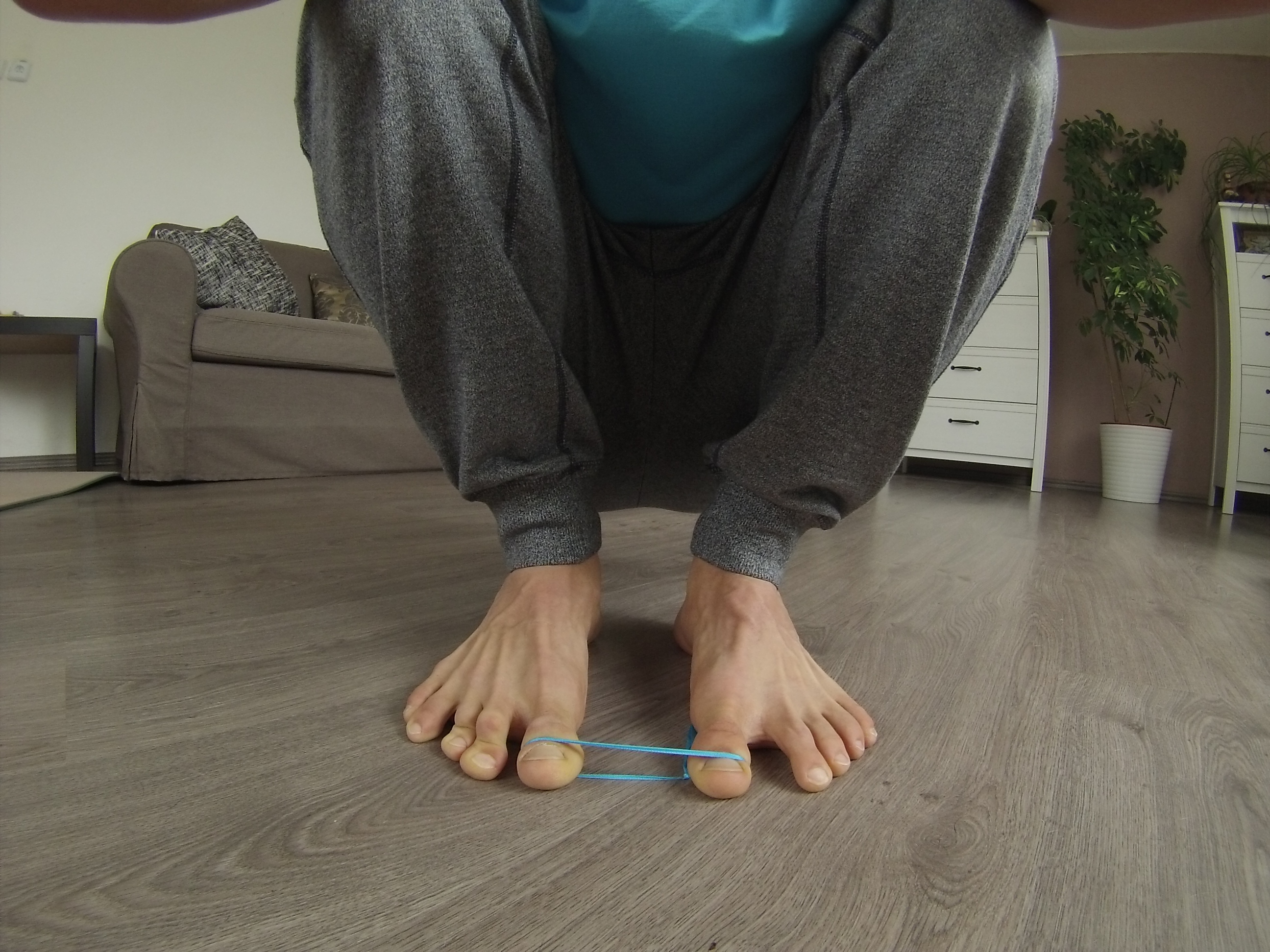
Well, once you manage to get your big toe as close to its natural position as possible, help it remember that position! By pressing your big toe firmly and intermittently into the ground! It simply needs to get used to this position and strengthen itself there!
Also walk on various surfaces. On grass, in the forest, on playgrounds,... For example, conscious walking on sand or small pebbles is perfect. Because when you press your toe into the ground and your foot sinks a little, the sand or pebbles "flow" between your toes, separating them even more. Excellent! 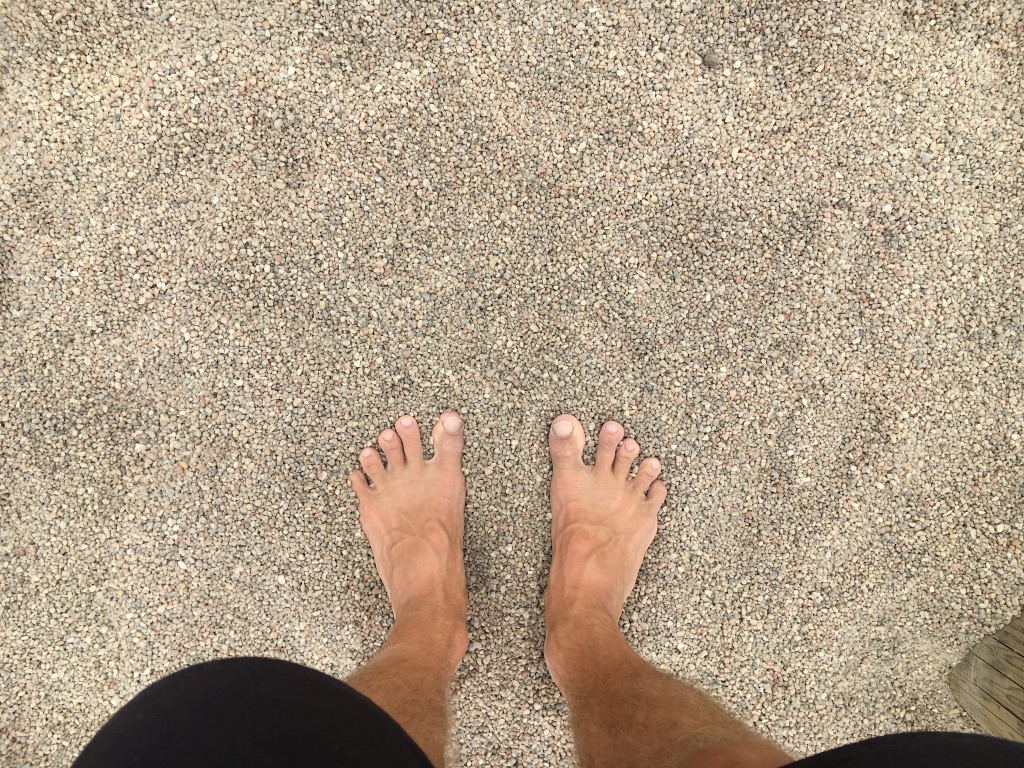
Balancing on a log is also great practice for proper foot alignment. Use something rounded... a log, a railing... ideally, be barefoot, stand up and stand on one leg for a while. Balance. Don't forget to lean on your big toe as well! Your foot will "wrap" around the rounded surface, your toes will start to GRASP, almost as if you were holding on with your hands.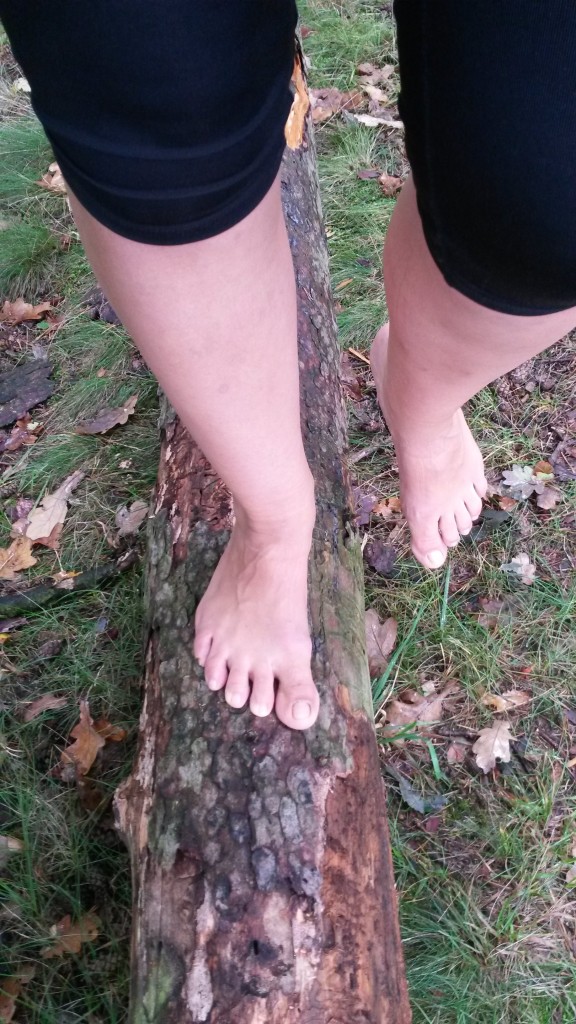
Toe socks are also good for separating toes.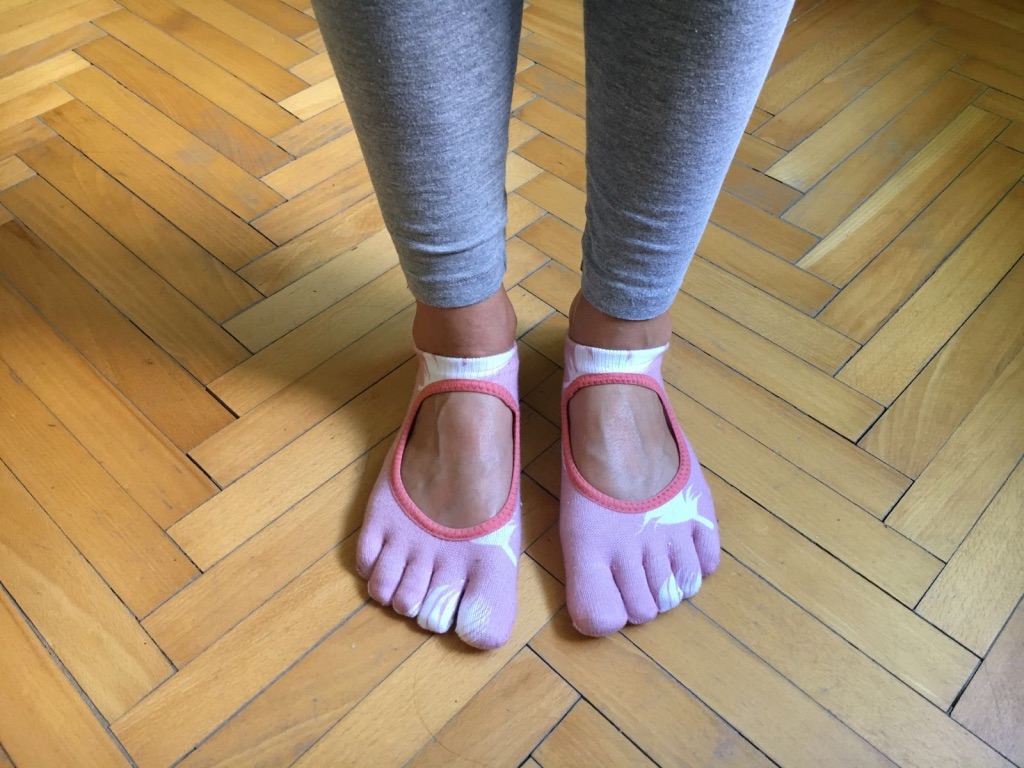
BAREFOOT SHOES
As I have mentioned many times, footwear is fundamental for our feet. To make our work with our feet as effective as possible, we need suitable footwear. The most sensible, from what is commonly available, are what I call barefoot shoes. However, be careful, not all shoes that claim to be barefoot truly are, so you need to understand what your foot really wants and needs.
I myself have many years of experience with barefoot shoes, which is why I wrote the article How to actually choose (barefoot) shoes. You will also find a small surprise under the article. ????
Allow your foot to regain its natural movement intelligence! <3
And most importantly, ENJOY IT!
PS: And if you don't want to do it alone, definitely sign up for one of my Seminars, Group lessons, or book a Private lesson.
I wish you and your feet wonderful days full of Natural Movement.
Matyáš